Onerep is among the many popular data removal services privacy-conscious folks like you and me use to erase their personal data from the extensive databases of data brokers, using automated opt-out processes. In this review, I’ll compare Onerep to its competitors like DeleteMe and Optery, both of which I’ve extensively tested. I’ll also evaluate how well Onerep can remove data and whether it’s a safe and legitimate service to use.

Key Takeaways
- Onerep’s past affiliation with data brokers raises serious concerns about the company’s data management practices.
- Onerep covers 318 public data broker sites on its basic plan and then up to 877 for its pro plan.
- Onerep is limited to US residents only and does not operate internationally.
- Onerep has historically taken a strictly automated approach to data removal, but with its pro plan now offers a dedicated privacy expert.
By the end, you’ll be equipped to decide if Onerep is the right data removal companion for you or if other alternatives like DeleteMe might be better.
Scroll down to continue reading this Onerep review, or click a link in the table of contents below to jump to a particular section:
How Data Brokers Operate
The rise in the number of websites that scrape and sell your personal information is baffling to me. These sites, known as data brokers, exploit legal loopholes and the absence of privacy regulations to profit from your private personal data.
Major players include:
- Whitepages
- BeenVerified
- Spokeo
- …and hundreds of other similar sites.
They gather data from various public records like social media accounts, government records, court documents, census data, and more, selling it to anyone willing to pay.
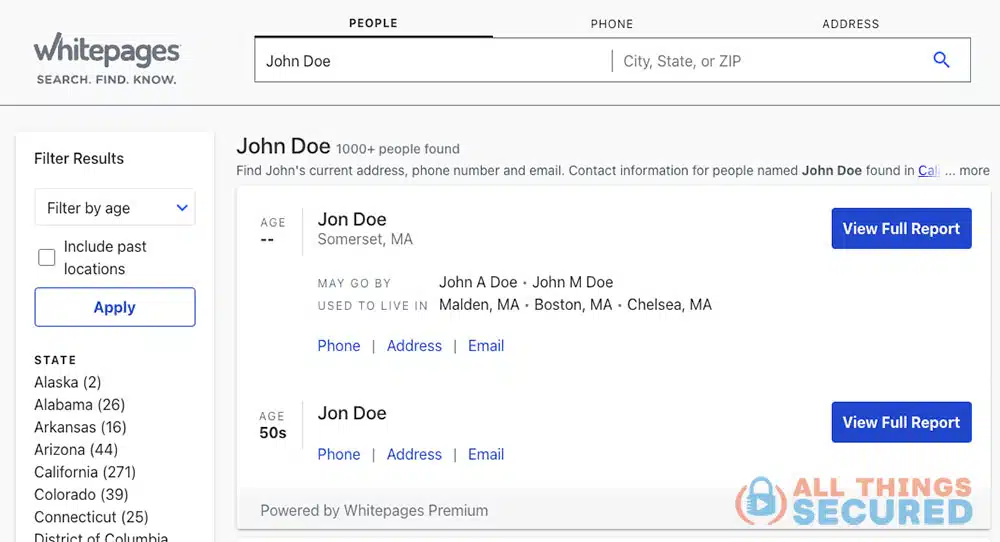
What’s even more concerning is how difficult they make it to remove this information. This involves time-consuming tasks like searching, compiling links, and authenticating emails and text messages. Fortunately, data removal services like OneRep exist to help track and remove your personal data from these data broker websites.
What are “Opt Out Requests”?
An opt-out request is exactly what it sounds like: it is a request for a data broker to remove your data from their records.
You can manually demand that these people-search sites take down your personal information, like your name, home addresses, birthdate, phone numbers, family connections, legal records, and property ownership details.
The catch is that this approach may require several days or weeks of back and forth with these platforms.
For a small fee, Onerep or other such data removal services handle all this labor on your behalf. It was the first service to market itself as a “fully automated AI-powered data removal service.” I’ll delve into the effectiveness of this automation process shortly, but first, let’s analyze if Onerep lives up to its claims of security.
Spoiler alert: There appear to be some serious red flags.
What Data Does Onerep Collect and Why?
Onerep’s automation technology scans the people search sites on its list to locate each one that possesses your personal data, then sends bulk opt-out requests on your behalf.
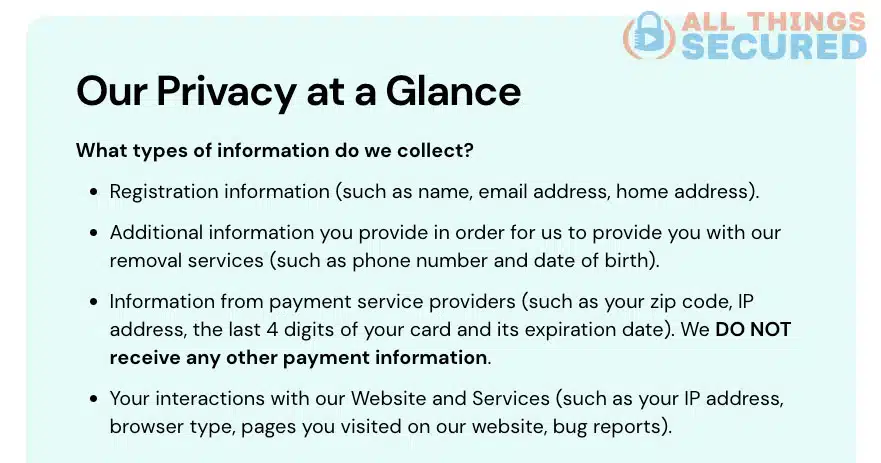
To enable this search, you must provide Onerep with personal information like your name, email addresses, phone numbers, home addresses, and date of birth. This is standard across the industry.
In addition to this, Onerep collects other data include:
- Information provided by payment service providers;
- Device information;
- Your interactions with Onerep’s website and services;
So what can they do with all of this data?
Privacy Policy: Onerep’s Data Handling Practices
While OneRep’s privacy policy doesn’t immediately raise suspicions. Things become more shady as you look closer.
An investigation by KrebsOneSecurity uncovered that OneRep’s Belarusian CEO and founder, Dimitri Shelest, is also the man behind dozens of people search sites, including a still-active data broker called Nuwber that sells background reports on people.

In response, Shelest admitted to having an ownership stake in Nuwber but claimed that Nuwber has “zero cross-over or information sharing with Onerep” and that he no longer operates any other people search sites.
One could argue that Dimitri has a better understanding of the data removal companies since he has operated one himself, but it also seems like he has played and profited from both sides of this issue.
Other companies agree. Mozilla, maker of the popular Firefox browser, ditched its partnership with Onerep citing this conflict of interest as the reason. Onerep issued a response trying to clarify the connections, but the damage had already been done.
Can Onerep Sell Your Data?
No, they are not. It is not permitted within Onerep’s privacy policy to sell your data, and it would be a terrible business practice if they did.
The question is, after finding out about this affiliation with data brokers, will you trust Onerep with your sensitive data?
Onerep Review 2026 | Pros & Cons
As someone who actively manages their online presence, I’ve tested multiple data removal services over the years, including Onerep. While the service has its strengths, it also has some notable shortcomings.
Let’s delve into the pros and cons of using Onerep for data removal.

What Stood Out About Onerep
Manually removing your data online is excruciatingly painful, which is why a service like Onerep offers the following advantages:
- Time-saving: Onerep claims to save users an average of 800 hours per year in request removal efforts. As someone who has tried to do this manually before, I can attest that it is a huge time saver.
- Security Certificates: Onerep has a SOC 2 certification, an audit which certifies how well a service provider protects customer data.
- User-Friendly Dashboard: While not as visually polished as some competitors (which I admit is subjective), Onerep’s dashboard provides a functional spreadsheet-style interface to track removals.
- Free Initial Report: New users can receive a free report before signing up. Simply provide your full name and residence, and you’ll instantly receive detailed results detailing your existing data broker profiles. This report doesn’t remove the listings, it simply lets you know they exist.
- Pricing and Structure: Onerep now offers multiple plans for individuals and families. The basic plan offers cheaper rates compared to many data removal services I’ve reviewed, like DeleteMe and Optery. This is due to its full automation, which accelerates the removal process and enables cost savings. The pro plan covers more data broker sites and includes a human privacy expert.
What I Wish Was Different (Onerep Cons)
Here are two areas where I find Onerep lacking:
- Questionable CEO: This is the primary concern with Onerep. The CEO’s past affiliation with data brokers raises serious doubts about his management practices. Such issues are irreparable, particularly in an industry where privacy is paramount.
- Lack of International accessibility: Onerep only works for residents of the US. By comparison, DeleteMe (see our full DeleteMe review) serves users from various countries, including Australia, Belgium, Canada, France, Germany, Ireland, Italy, the Netherlands, Singapore, and the UK.
Onerep’s Limitations
Many people confuse data removal tools with reputation management services. A data removal tool works to remove personal information from data brokers, while a reputation management service is a bespoke service that seeks to influence search results and media coverage.
OneRep is strictly a data removal service and doesn’t possess the capability to bury information that appears in Google search results or other search engines or to access private social media accounts.
While it can minimize your digital footprint, OneRep cannot erase the entire internet history.
Onerep Plans and Pricing
And like most online services, Onerep provides a couple of different plans.
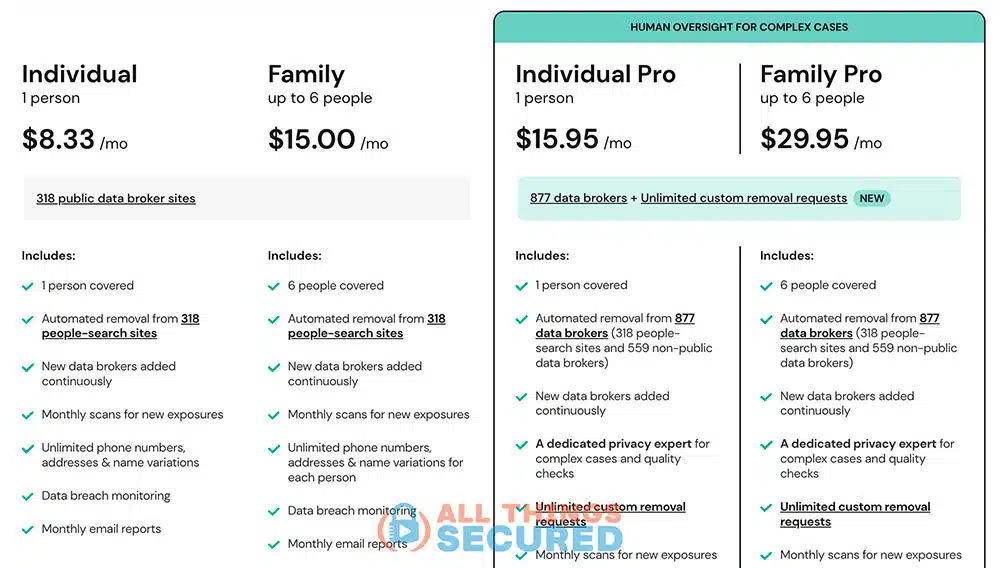
For families, the Onerep family plan covers up to six people, which is a great deal considering the high cost with other providers. Onerep also offers monthly subscriptions, unlike DeleteMe, giving users the flexibility to remove their data and cancel their subscription in less time as needed.
However, users who choose to cancel their subscription may find themselves needing to resubscribe whenever their sensitive personal information resurfaces online. Don’t forget these brokers are relentless.
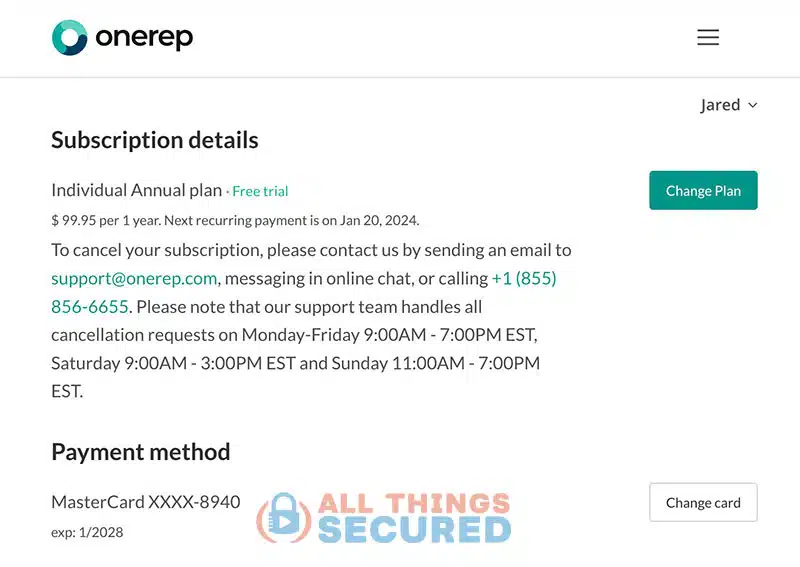
Furthermore, although Onerep provides a 5-day free trial, canceling either the trial or a paid subscription requires emailing or calling the company, rather than a simple “Cancel” button like DeleteMe provides, resulting in added friction to the cancellation process.
Setting Up and Using Your OneRep Account
If you’re willing to overlook the CEO’s past affiliation with data aggregators and give it a shot, you can visit their website and create an account.
After your payment goes through, you’ll be directed to a form where you’ll need to provide your name, date of birth, city, ZIP code, state, and other details. You can include multiple name variations or aliases, addresses, phone numbers, and email addresses as needed.
Once you’ve entered your information, you’ll access the Onerep dashboard. New users are guided through an interactive tour of the available features.
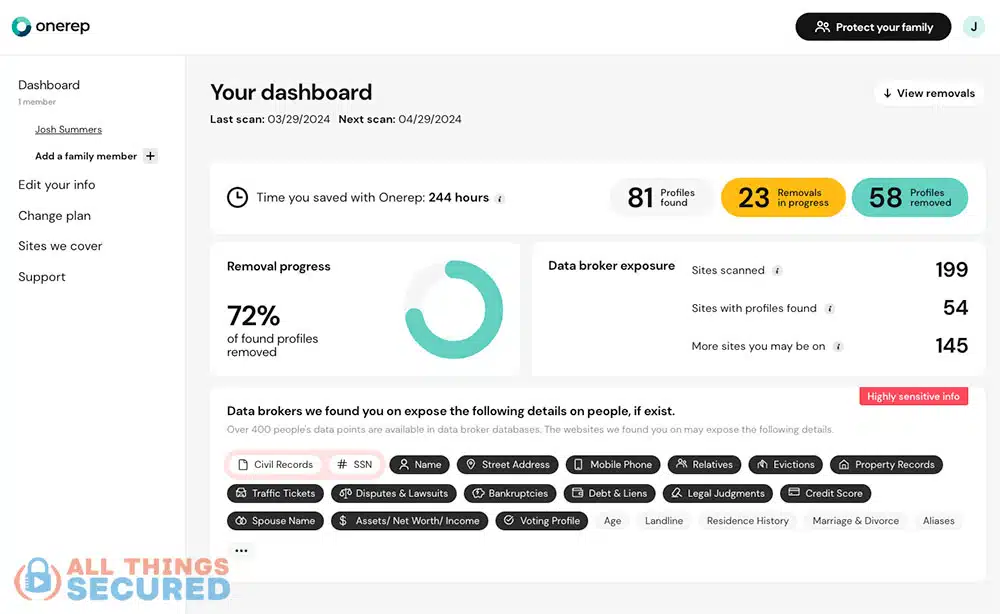
Onerep Privacy Report
Onerep’s scan typically completes within a few hours.
Once you receive your results, you’ll see your data broken up into “public” and “non-public” data brokers, and then divided even further:
- Public data brokers: this list of 318 data brokers is scanned for all users.
- Non-public data brokers: this list is reserved only for pro plan users.
- All profiles found: here you’ll find all of the records they believe might be associated with you
- Removed: a list of personal records that have been confirmed as removed.
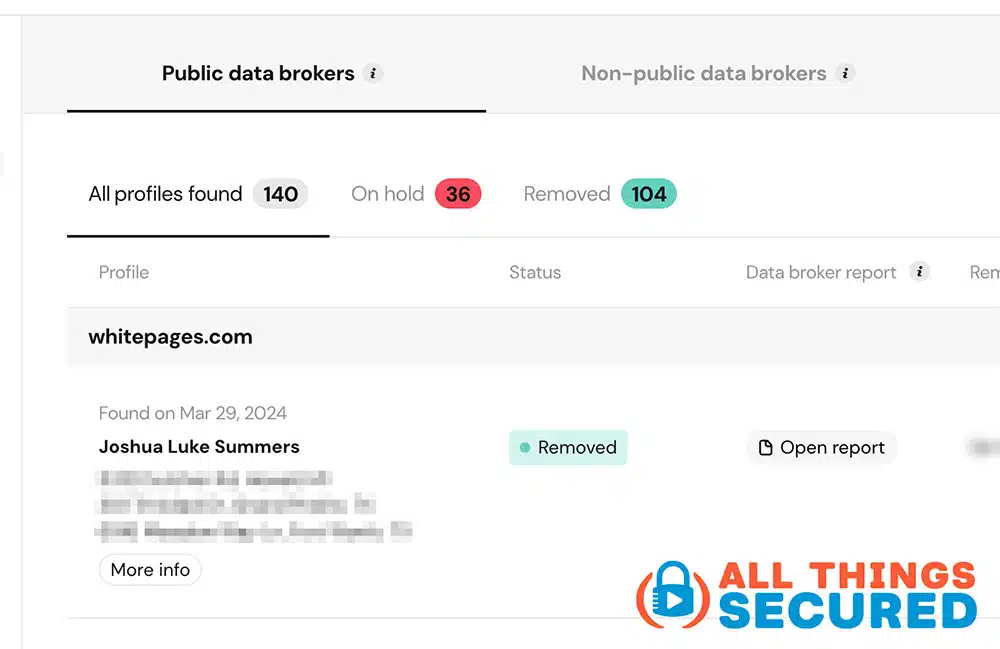
For each entry on your Onerep report, you can click “Open report” to see what private information each data broker has about you. Onerep also offers a sample PDF and a DIY opt-out guide for each data broker.
It’s unclear how long these data broker sites take to remove your data. Some may do it instantly, while others claim it could take 6-10 weeks, highlighting the shady nature of data broker businesses.
Proactive Data Protection Measures
While data removal services like Onerep can significantly reduce your digital footprint, it’s also crucial to adopt certain preventive practices to limit identity theft and the data brokers’ ability to acquire your sensitive details in the first place.
These methods include:
- Mask Your Email and Phone Numbers: Use alternative email addresses instead of your primary accounts for online activities. Many sites let you generate random email addresses for authentication purposes. Similarly, consider leveraging disposable phone numbers rather than your actual contact details when signing up for services.
- Mask Your Financial Data: Utilize various virtual credit card options that enable you to create and manage the card information you use for online purchases or even in-person transactions.
- Use a Private Internet Browser: If you’re still relying on Google Chrome for your everyday browsing needs, consider switching to privacy-focused Chrome alternatives like Firefox or Brave.
FAQs | OneRep Review
Let’s address some of the most common questions users have about OneRep.
Onerep holds a SOC 2 certification, proof that it handles customer data well. To date, Onerep has been a safe option for customers. However, the current CEO’s former ties with data brokers don’t instill confidence in the company.
Both Onerep and DeleteMe offer similar services and it often boils down to preference. However, DeleteMe provides international accessibility and benefits from a longer, cleaner track record in the industry compared to Onerep.
To delete your Onerep account or cancel any active subscriptions, you must reach out to their support team via email, live chat, or phone. The contact details are: Email: [email protected]
Phone: 855-856-6655
Final Thoughts | Is Onerep Legit?
Onerep’s offers a solid solution for those who want a good data removal service. The CEO’s past affiliation with data brokers is unfortunate and hard to overlook as long as he is still leading the company. It’s up to you to decide whether this actually represents a risk to you and your data.
Personally, I prefer to use DeleteMe over Onerep, given its established trust over the years.
You can further compare the strengths and weaknesses of these two services in our DeleteMe vs Onerep comparison.